
Loapi Tented Camp
A private valley in the Kalahari, where six secluded homes put you closer to the wild than almost anywhere else in Africa
Overview
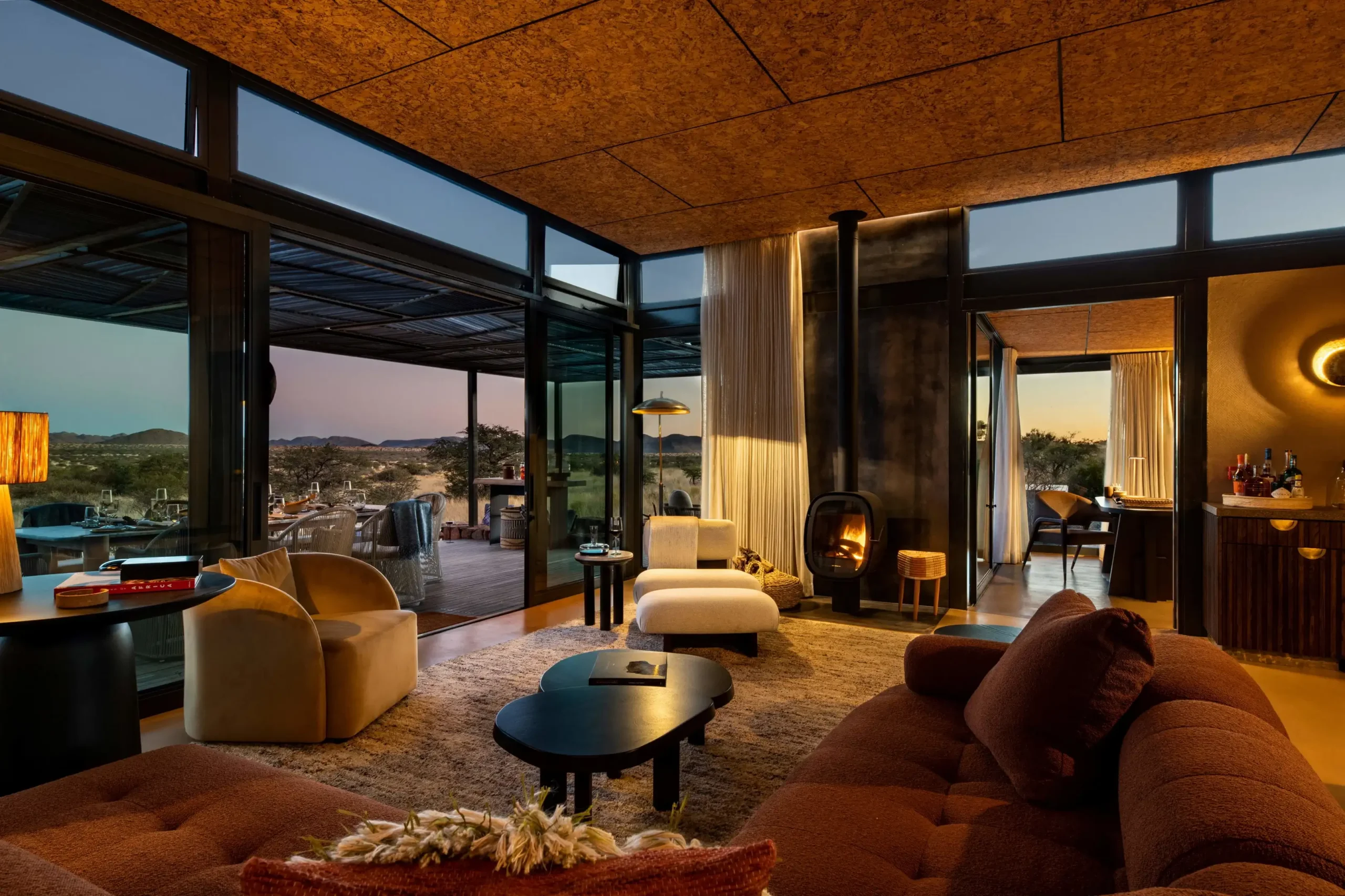
Loapi Tented Camp sits folded into the Korannaberg Mountains, inside a reserve so vast and so lightly used that solitude becomes part of the experience itself. This is Tswalu, South Africa‘s largest privately protected wilderness, covering roughly 282,000 acres of semi-arid Kalahari in the Northern Cape. Within it, Loapi is the quietest corner: six freestanding homes, each one operating as its own micro camp, complete with a private chef, butler, and guide who answer to nobody’s schedule but yours.
The camp opened in 2023 as the newest addition to Tswalu’s three properties, alongside the original Motse lodge and the private Tarkuni Homestead. Of the three, Loapi is built for couples and small groups seeking total privacy rather than a communal lodge experience. Four one bedroom homes and two larger two bedroom residences are spaced roughly a hundred metres apart along a valley floor, each positioned to catch sweeping views south across the reserve’s characteristic arid savannah.
Nothing about the design is designed to impress. Natural materials, soft earth tones, and wide open sightlines keep the focus firmly outside the walls, where it belongs. Local architects worked with the land’s existing contours rather than against them, so each tented home feels tucked into its surroundings instead of placed on top of them. Guests wake to Kalahari light pouring across the valley, spend evenings around a private fire pit watching one of the clearest night skies on the continent, and shower outdoors because the camp was built to use water wisely, not to show off. Bathtubs were left out entirely, a small but deliberate choice that runs through the whole property’s approach to sustainable, low impact luxury.
What sets Loapi apart from almost anywhere else on safari is control. Because every group gets its own vehicle, guide, and tracker, there’s no shared itinerary, no fixed departure time, and no compromising with other guests over where the day goes. Mornings can start before sunrise or not at all. Game drives can run for twenty minutes or four hours, depending on what the land offers up. Days can bend entirely around curiosity, whether that means tracking a pangolin at dawn, sitting still for an hour watching a pack of wild dogs move through long grass, or abandoning the vehicle altogether for a guided walk through terrain that sees barely any foot traffic.
Tswalu maintains the lowest vehicle density of any reserve in South Africa, which changes the texture of every sighting. Encounters feel earned rather than staged, unfolding without a queue of other vehicles nearby. The species list reads like a rarities checklist rather than a standard Big Five itinerary: aardvark, aardwolf, brown hyena, and bat eared fox all call this reserve home, alongside more familiar names like lion, cheetah, wild dog, and antelope such as roan and sable. Guided walks and night drives open up a different side of the reserve entirely, with trackers reading signs most visitors would walk straight past.
One evening of every stay is handed over to Klein Jan, Tswalu’s celebrated restaurant and a destination in its own right. Dinner begins in a century old farmhouse before descending into a candlelit dining room carved into the earth below it, a setting built around the same instinct for restraint that defines Loapi itself. It’s a fitting close to a stay that’s built almost entirely around slowing down: a place for travellers who would rather sit with one sighting for an hour than chase five of them in a single morning, and who measure a good safari in stillness as much as in wildlife seen.
 Bird Watching
 Cuisine
 Cultural Visits
 Dune Walk
 Game drives
 Night Safari
 Star-gazing
 Drink
Drink Fireplace
 Library
 Out Door Shower
 Plunge Pool
 Shower
 Spa
Spa Wifi
Wifi